
Asphalt contractor in Seven Hills, NSW
Working across Seven Hills
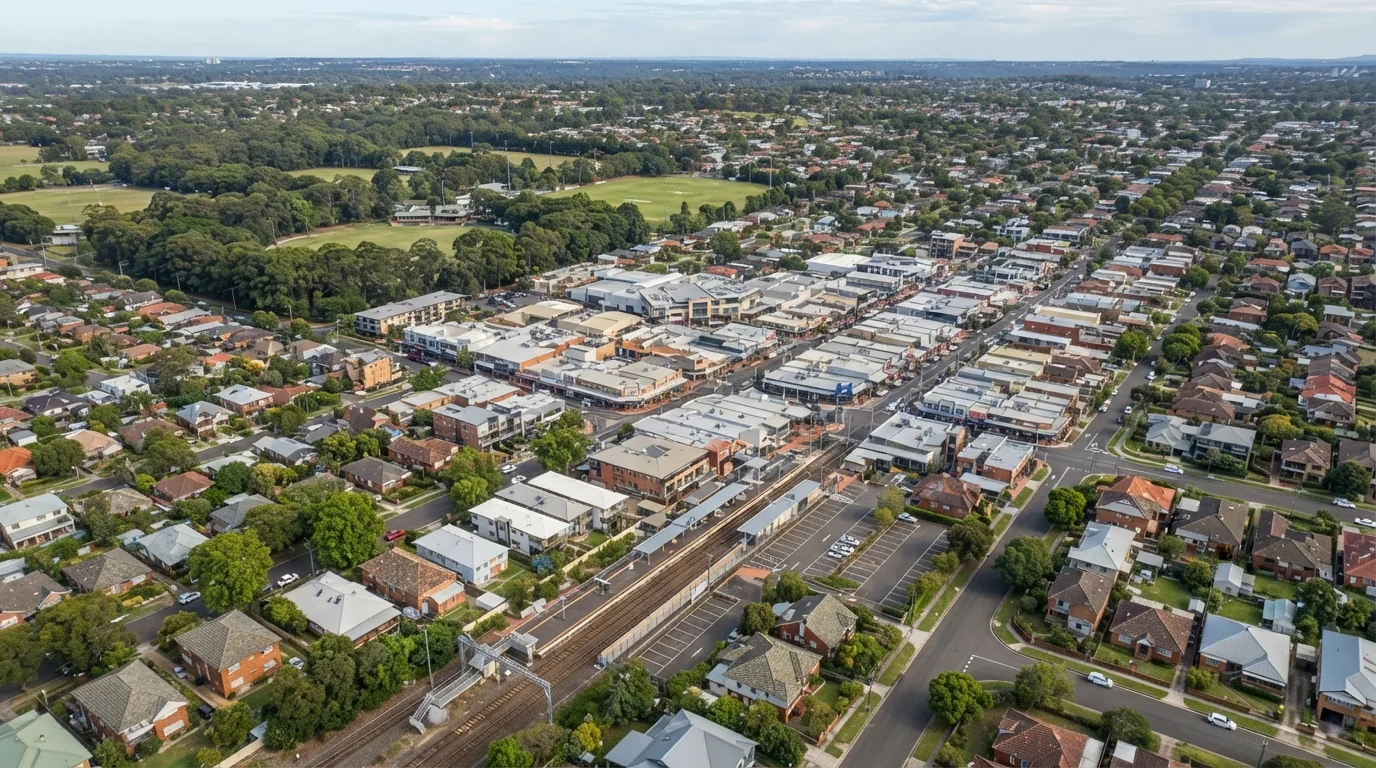
Seven Hills is about 33 kilometres north-west of the Sydney CBD and about 45 metres above sea level. It is mostly residential, but a large industrial and commercial zone lies north of the railway, bounded by Prospect Highway, Abbott Road, Old Windsor Road and Blacktown Creek. Leabons Lane is a narrow, busy corridor between south Seven Hills and Blacktown, where housing and light commercial uses sit side by side. The M2, M4 and M7 motorways all link the suburb to the rest of Sydney.
Industrial sites here mean truck turning areas, loading docks and yards in daily use, so we plan around when trucks come and go. Bus depots stand on Hartley Road and Foundry Road, where heavy vehicles turn and park. Prospect Highway and Old Windsor Road carry heavy traffic, so work near them may need traffic control and approval from the road authority. The site manager holds the key, and we ask for service plans before we cut.
Houses from the mid 20th century were mostly single storey on blocks of 600 to 900 square metres, and many have since been replaced by two-storey brick veneer homes. A rebuild on one of those blocks usually means a new driveway and crossover. Grantham Heritage Park keeps remnant Cumberland Plain woodland, and the clay soils of that plain drain slowly. Blacktown Creek forms the edge of the industrial zone, and we cannot tell how soft the ground beside it is until the old surface is off.
What we do here most
What Seven Hills keeps needing
Heavy vehicles on industrial land and rebuilt houses on old blocks both put new loads on old surfaces. The jobs below follow that.
Commercial Asphalting
Truck turning area in an industrial yard
A turning area takes the hardest wear because wheels twist on the spot. The base under it has to be built for that load, and the surface needs a fall so water does not sit where trucks turn. We look at how many vehicles use the yard and how they swing before we plan the build-up. Gate and dock levels set the finished height.
Asphalt Driveway Construction
New driveway for a rebuilt two-storey house
When an older house on a large block is replaced, the old driveway is usually the first thing to go. The crossover has to meet the kerb and footpath, and the base has to be firm enough for builders' trucks first and the family's cars later. We set the levels to the new garage floor and make sure water falls toward the street.
Asphalt Pavement Restoration
Restoring a cracked yard used by heavy vehicles
Where a yard has been used by buses or trucks for years, cracks and ruts follow the wheel paths. We map the failed areas, cut them out and rebuild the base beneath them. Then we resurface the whole yard so the joins do not show. How much of the base has failed becomes clear only once the old surface is cut.
Pothole repairs
Potholes on a narrow, busy through lane
On a narrow road with steady traffic, a pothole grows quickly and there is little room to work around it. We cut the damaged patch square, clear out the loose and wet material and rebuild the layers before asphalt goes in. Traffic control is planned first, because there is often nowhere for a vehicle to pass.
If it is urgent
If a pothole opens up on a Seven Hills road
- 1Keep people and vehicles clear of the hole, and note its size and where it sits in the lane.
- 2Do not fill it with loose soil or sand, because heavy wheels will throw it straight back out.
- 3Tell us whether it is on a street, a through lane or inside an industrial yard, and whether heavy vehicles use it.
Common questions
Frequently Asked Questions
Which suburbs do you cover?
We work across Sydney and the surrounding suburbs, and the service areas page lists twenty-one of them, from Windsor and Richmond in the north-west to Liverpool and Narellan in the south-west. If yours is not listed it is still worth asking, because the list is where we work most often rather than a boundary.
What hours are you open?
We are open Monday to Friday, 8am to 5pm, and closed on Saturday and Sunday. Ring in those hours and tell us the suburb and what the surface is used for.
What is the difference between resurfacing and mill and fill?
Resurfacing lays new asphalt over the existing surface after it has been cleaned and repaired. Mill and fill first grinds off the top layer of old asphalt, then lays new asphalt in its place, which keeps the finished level the same and removes what has worn out.
How do I know if I need a patch or a full rebuild?
A surface that is only worn or lightly cracked can often be patched or resurfaced. Cracks in a network, soft spots that move under a foot, or water that keeps coming back usually mean the base under the surface has failed, and then the base has to be dug out and rebuilt.
How long before I can drive on new asphalt?
Asphalt has to cool before it takes traffic. How long that takes depends on how thick it is laid, the weather and the mix, so we tell you on the day when it is safe to use rather than giving a number here.
Can asphalt be laid in the rain?
No. Rain and a wet surface stop the new asphalt bonding to the layer under it, so a job planned for a wet day is moved to the next dry one.
What is spray sealing and when is it used?
Spray sealing sprays a layer of bitumen onto a prepared surface and covers it with stone chips that are rolled in. It is used on rural roads, long driveways and low-traffic roads where a full asphalt surface is more than the job needs.
Do you work on driveways as well as roads and car parks?
Yes. Asphalt driveways, car parks and roads are all on our service list, and so are the roadworks and civil work that sit underneath them.
Do I need council approval before the work starts?
Work on a public road or footpath usually needs permission from the road authority first. Work on private land can need council approval depending on the job. Describe the site when you call and we can tell you what to check.
What should I have ready when I call?
The suburb, roughly how big the area is in metres, what the surface is made of now, what it is used for and what is going wrong with it. That is enough to start a conversation about the job.
Do you do drainage as well as surfacing?
Yes. Stormwater drainage and retaining walls are on our service list, and they are often part of a surfacing job, because water that sits on or under a surface is what breaks it up.
What is asphalt profiling and road milling?
Profiling uses a milling machine to grind the top off an existing asphalt or concrete surface to a set depth and level. It removes a worn layer, corrects the shape of the road, or gets the surface ready for new asphalt.
Can old asphalt be recycled?
Yes. Old asphalt that has been milled or broken out can be crushed and used again as recycled road base, so it does not all have to go to landfill.
Do you build sports courts?
Sports court asphalting is on our service list. Tell us the type of court and the size of the area, and whether it is a new base or an existing court that needs resurfacing.
What does it cost?
The cost depends on the size of the area, how thick the surface is laid, the condition of the base under it and how easy the site is to reach. No two sites are the same, so we do not publish prices. Describe yours and we will talk through what drives it.
Everything we do here
Services in Seven Hills, NSW
Here is everything we do, and in Seven Hills the work runs from home driveways to heavy-vehicle yards.
Also nearby
We work in these suburbs too
Local, and on the phone
Planning a job in Seven Hills
Tell us whether the site is a house driveway or an industrial yard, and what vehicles use it. That decides how we plan the base and the traffic around it. Type it into the form with the street name.
0468 075 505Monday to Friday 8am to 5pm, Saturday and Sunday closed
Not urgent? Send us the job instead