
Asphalt contractor in Riverstone, NSW
Working across Riverstone
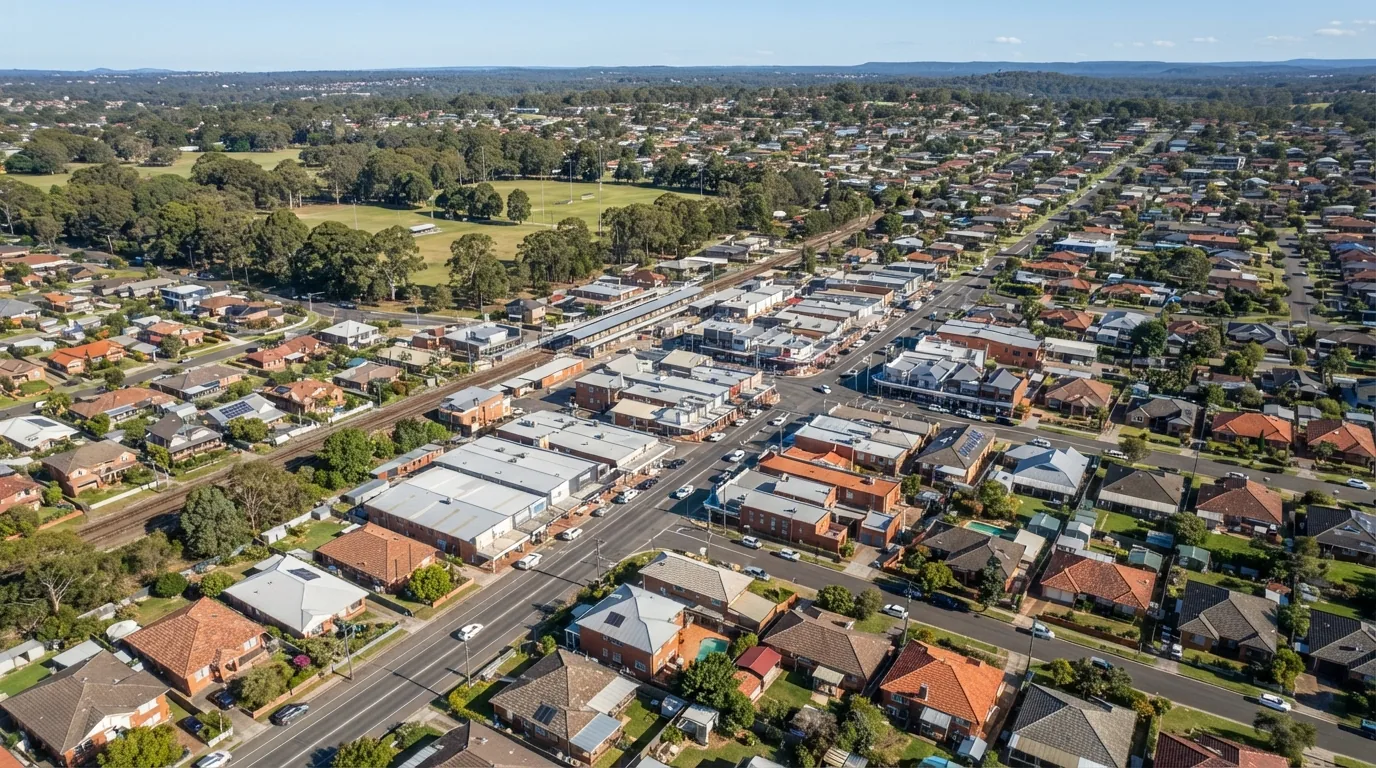
Riverstone sits on the Richmond railway line, between Richmond Road and Windsor Road, with an M7 ramp on Richmond Road. A large industrial area runs along the northern side of the suburb. Housing now covers farmland that was released for development around 2014, and poultry farms and market gardens still work some of the ground. Near the station, the level crossing and the Garfield Road lights already hold traffic back, which shapes how any job beside them is run.
Who we deal with depends on the site. An industrial yard usually has a gate, a key holder and trucks that cannot wait, so we plan the order of work around them. A main road such as Richmond Road or Windsor Road may need the road authority's approval before we work on it, while a local street is usually a council matter. Beside the station, traffic control comes first because the queues are already there. Services under the ground are located before anything is cut or dug.
Riverstone is low ground, about 21 metres above sea level. Blacktown Council says its flooding comes from local overland flow and from the Hawkesbury-Nepean system, and in 2021 water reached homes along Marsden Road. A pavement that stays wet loses strength from the base up, so here the drainage and the base matter as much as the asphalt above them. Farm drives and industrial yards add heavy axle loads over soft ground, and they show it first at the edges.
What we do here most
What Riverstone keeps needing
Riverstone mixes working industrial land, new estates and low ground, and each one loads a pavement in a different way.
Commercial Asphalting
A truck yard in the northern industrial area
Trucks turn on the same arc all day, and that arc is where an industrial yard fails first. The asphalt shoves into ripples and the edge breaks away. We look at the turning area and the loading bays before anything else, and we plan the work in stages so the gate stays usable. Whether the base is sound shows once the old surface is off.
Subdivision Road Construction
A new estate street on former farmland
Land released from farming around 2014 is now streets, kerbs and driveways. A new street starts with the stripped formation, the stormwater pipes and the road base, and the asphalt goes down last. If the pipes or the base are wrong, the surface cannot hide it for long. We need the lot layout and the stage you are working to.
Road repairs
Edge damage after water lies on a low road
On Riverstone's low ground, water that lies on a road soaks into the base. The seal then lifts at the edge, and the road breaks up along the wheel paths. A repair that only patches the surface fails again if the wet base is left in place. We cut out the failed area back to firm material and rebuild it in layers.
Rural Road & Driveway Sealing
A long farm driveway worked by heavy trucks
Poultry farms and market gardens need a sealed drive that keeps mud off the road and holds up under heavy trucks. A bitumen seal on a well compacted gravel base does that if the drainage beside it is kept clear. On soft ground the base needs checking before any seal is laid, because a seal only follows what is under it. Tell us how long the drive is and what runs on it.
If it is urgent
If a pothole opens up on a Riverstone street
- 1Keep people and vehicles clear of the hole, and note its size, its depth and which side of the road it is on.
- 2Do not fill it with loose soil, sand or gravel, because on wet low ground that washes out and leaves a larger hole behind.
- 3When you call, tell us the street, whether water had been lying there, and whether it is a local street or a main road such as Richmond Road or Windsor Road, since the road authority may need to be asked first.
Common questions
Frequently Asked Questions
Which suburbs do you cover?
We work across Sydney and the surrounding suburbs, and the service areas page lists twenty-one of them, from Windsor and Richmond in the north-west to Liverpool and Narellan in the south-west. If yours is not listed it is still worth asking, because the list is where we work most often rather than a boundary.
What hours are you open?
We are open Monday to Friday, 8am to 5pm, and closed on Saturday and Sunday. Ring in those hours and tell us the suburb and what the surface is used for.
What is the difference between resurfacing and mill and fill?
Resurfacing lays new asphalt over the existing surface after it has been cleaned and repaired. Mill and fill first grinds off the top layer of old asphalt, then lays new asphalt in its place, which keeps the finished level the same and removes what has worn out.
How do I know if I need a patch or a full rebuild?
A surface that is only worn or lightly cracked can often be patched or resurfaced. Cracks in a network, soft spots that move under a foot, or water that keeps coming back usually mean the base under the surface has failed, and then the base has to be dug out and rebuilt.
How long before I can drive on new asphalt?
Asphalt has to cool before it takes traffic. How long that takes depends on how thick it is laid, the weather and the mix, so we tell you on the day when it is safe to use rather than giving a number here.
Can asphalt be laid in the rain?
No. Rain and a wet surface stop the new asphalt bonding to the layer under it, so a job planned for a wet day is moved to the next dry one.
What is spray sealing and when is it used?
Spray sealing sprays a layer of bitumen onto a prepared surface and covers it with stone chips that are rolled in. It is used on rural roads, long driveways and low-traffic roads where a full asphalt surface is more than the job needs.
Do you work on driveways as well as roads and car parks?
Yes. Asphalt driveways, car parks and roads are all on our service list, and so are the roadworks and civil work that sit underneath them.
Do I need council approval before the work starts?
Work on a public road or footpath usually needs permission from the road authority first. Work on private land can need council approval depending on the job. Describe the site when you call and we can tell you what to check.
What should I have ready when I call?
The suburb, roughly how big the area is in metres, what the surface is made of now, what it is used for and what is going wrong with it. That is enough to start a conversation about the job.
Do you do drainage as well as surfacing?
Yes. Stormwater drainage and retaining walls are on our service list, and they are often part of a surfacing job, because water that sits on or under a surface is what breaks it up.
What is asphalt profiling and road milling?
Profiling uses a milling machine to grind the top off an existing asphalt or concrete surface to a set depth and level. It removes a worn layer, corrects the shape of the road, or gets the surface ready for new asphalt.
Can old asphalt be recycled?
Yes. Old asphalt that has been milled or broken out can be crushed and used again as recycled road base, so it does not all have to go to landfill.
Do you build sports courts?
Sports court asphalting is on our service list. Tell us the type of court and the size of the area, and whether it is a new base or an existing court that needs resurfacing.
What does it cost?
The cost depends on the size of the area, how thick the surface is laid, the condition of the base under it and how easy the site is to reach. No two sites are the same, so we do not publish prices. Describe yours and we will talk through what drives it.
Everything we do here
Services in Riverstone, NSW
These are the services we offer, and on Riverstone's low and often wet ground the base and drainage work can matter as much as the new surface.
Also nearby
We work in these suburbs too
Local, and on the phone
Tell us about your Riverstone site
Tell us what kind of site it is, such as an industrial yard, an estate street, a farm drive or a driveway, and whether water lies on it after rain. That decides how we plan the first visit. Please type it in, there is no need to send photos.
0468 075 505Monday to Friday 8am to 5pm, Saturday and Sunday closed
Not urgent? Send us the job instead