
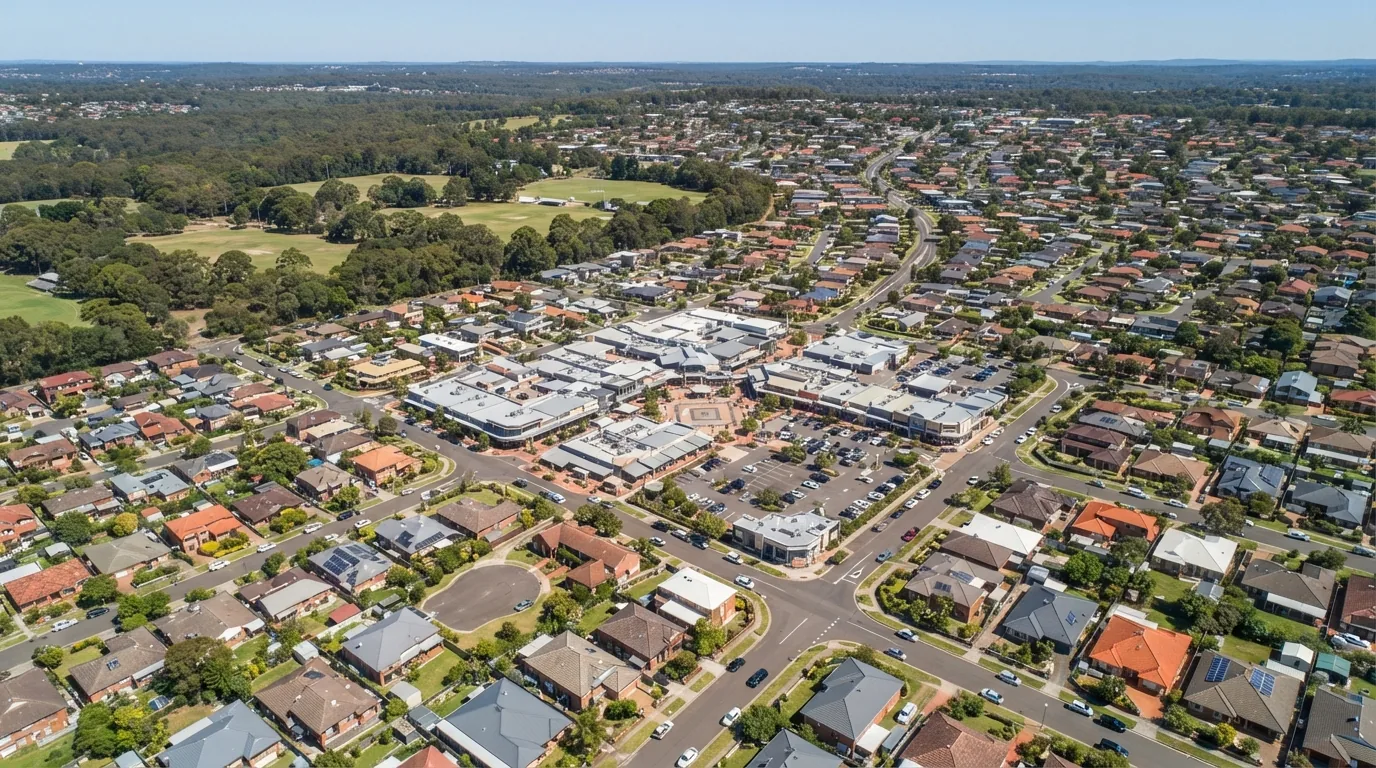
Asphalt contractor in Rouse Hill, NSW
Working across Rouse Hill
Windsor Road runs through the middle of Rouse Hill and is now four lanes. The town centre was built on a former golf course at the corner of Windsor Road and White Hart Drive and opened in 2008, with a smaller village centre on Windsor Road opening in 1999. Around them are newer homes. At the 2021 census, about 54 per cent of dwellings were separate houses, 20 per cent townhouses and 25 per cent flats or apartments. Work here is often a shared driveway, a car park or a street.
Townhouse and apartment complexes have shared driveways and visitor parking that a strata committee or building manager controls, not the individual owner, so we need to know who gives the go-ahead. A shopping centre car park runs on opening hours, which decides when surface work can happen. Windsor Road may need the road authority's approval and proper traffic control. Heritage sites such as Rouse Hill House and Farm and the Royal Oak Inn mean council may need to be asked about work close to them.
Rouse Hill was chosen for suburban growth in 1986 mostly because it floods less than the land around it. Most of its housing has gone up since the early 2000s, so the surfaces are young, and the faults are not those of age. They are wheel-path rutting where buses and trucks run, patches that settle where services were laid, and edges broken by heavy vehicles on residential streets. A young surface still needs the right base under it.
What we do here most
What Rouse Hill keeps needing
Rouse Hill is a young suburb, so the jobs are mostly about shared and busy surfaces that wear because they are used hard, not because they are old.
Car Park Resurfacing
A busy retail car park wearing at the entry
A shopping car park wears fastest where cars turn in and out and around the busiest bays. Resurfacing is done in sections so some of the bays remain open. The old line marking is covered, so the bays, arrows and accessible spaces are marked again afterwards. We need to know the opening hours and which sections can close.
Asphalt Paving & Surfacing
A shared driveway in a townhouse complex
A shared driveway serves many households and is used by bin trucks, removalists and visitors. Surfaces here crack where the base is thin and pond where the falls are wrong. Work has to be approved by whoever manages the complex and planned around residents' cars. We would need to know who gives approval and how many cars park along the strip.
Pothole repairs
A settled trench patch in a residential street
Where services were laid under a street, the backfill can settle over the years and leave a dip along the trench line. Water gets in at the edges of the patch and the dip becomes a hole. A lasting repair cuts out past the damage and rebuilds the base before the new asphalt goes in. Tell us how long the dip is.
Mill & Fill Asphalting
A rutted street on a bus and truck route
Buses and trucks run in the same wheel paths and press the asphalt into grooves. Water lies in the grooves and speeds up the damage. Milling takes off the rutted layer to a clean level, and new asphalt goes back to the same height as the kerb and the driveways. We need to know the length of the street and where it meets side roads.
If it is urgent
If a pothole opens up on a Rouse Hill street
- 1Keep people and vehicles clear of the hole, and note its size and whether it sits along a line where a service trench was cut.
- 2Do not fill it with loose soil, sand or gravel, because passing traffic scatters it and the hole fills with water again.
- 3When you call, tell us whether it is a council street, Windsor Road or a private driveway in a townhouse or apartment complex, since that decides who has to approve the repair.
Common questions
Frequently Asked Questions
Which suburbs do you cover?
We work across Sydney and the surrounding suburbs, and the service areas page lists twenty-one of them, from Windsor and Richmond in the north-west to Liverpool and Narellan in the south-west. If yours is not listed it is still worth asking, because the list is where we work most often rather than a boundary.
What hours are you open?
We are open Monday to Friday, 8am to 5pm, and closed on Saturday and Sunday. Ring in those hours and tell us the suburb and what the surface is used for.
What is the difference between resurfacing and mill and fill?
Resurfacing lays new asphalt over the existing surface after it has been cleaned and repaired. Mill and fill first grinds off the top layer of old asphalt, then lays new asphalt in its place, which keeps the finished level the same and removes what has worn out.
How do I know if I need a patch or a full rebuild?
A surface that is only worn or lightly cracked can often be patched or resurfaced. Cracks in a network, soft spots that move under a foot, or water that keeps coming back usually mean the base under the surface has failed, and then the base has to be dug out and rebuilt.
How long before I can drive on new asphalt?
Asphalt has to cool before it takes traffic. How long that takes depends on how thick it is laid, the weather and the mix, so we tell you on the day when it is safe to use rather than giving a number here.
Can asphalt be laid in the rain?
No. Rain and a wet surface stop the new asphalt bonding to the layer under it, so a job planned for a wet day is moved to the next dry one.
What is spray sealing and when is it used?
Spray sealing sprays a layer of bitumen onto a prepared surface and covers it with stone chips that are rolled in. It is used on rural roads, long driveways and low-traffic roads where a full asphalt surface is more than the job needs.
Do you work on driveways as well as roads and car parks?
Yes. Asphalt driveways, car parks and roads are all on our service list, and so are the roadworks and civil work that sit underneath them.
Do I need council approval before the work starts?
Work on a public road or footpath usually needs permission from the road authority first. Work on private land can need council approval depending on the job. Describe the site when you call and we can tell you what to check.
What should I have ready when I call?
The suburb, roughly how big the area is in metres, what the surface is made of now, what it is used for and what is going wrong with it. That is enough to start a conversation about the job.
Do you do drainage as well as surfacing?
Yes. Stormwater drainage and retaining walls are on our service list, and they are often part of a surfacing job, because water that sits on or under a surface is what breaks it up.
What is asphalt profiling and road milling?
Profiling uses a milling machine to grind the top off an existing asphalt or concrete surface to a set depth and level. It removes a worn layer, corrects the shape of the road, or gets the surface ready for new asphalt.
Can old asphalt be recycled?
Yes. Old asphalt that has been milled or broken out can be crushed and used again as recycled road base, so it does not all have to go to landfill.
Do you build sports courts?
Sports court asphalting is on our service list. Tell us the type of court and the size of the area, and whether it is a new base or an existing court that needs resurfacing.
What does it cost?
The cost depends on the size of the area, how thick the surface is laid, the condition of the base under it and how easy the site is to reach. No two sites are the same, so we do not publish prices. Describe yours and we will talk through what drives it.
Everything we do here
Services in Rouse Hill, NSW
These are the services we offer, and in a suburb of newer surfaces the work is often resurfacing, patching and shared driveways rather than full rebuilds.
Also nearby
We work in these suburbs too
Local, and on the phone
Tell us about your Rouse Hill site
Tell us whether the surface is a council street, a shared driveway or a car park, and who manages it. That decides who has to approve the work and how a visit is planned. Please type it in, there is no need to send photos.
0468 075 505Monday to Friday 8am to 5pm, Saturday and Sunday closed
Not urgent? Send us the job instead