
About Our Asphalt Work in Riverstone, NSW
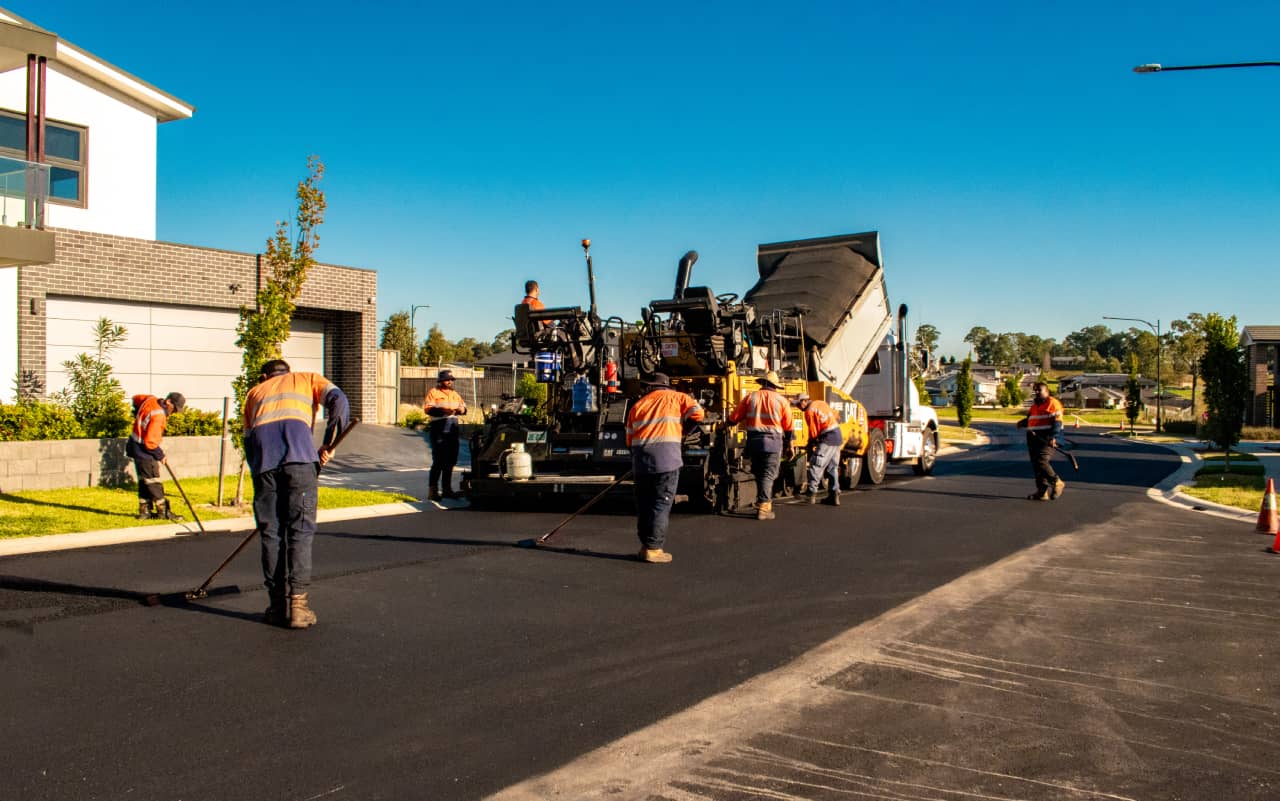
Our story
Asphalt and civil work from one business
The business was established in 1978 and is family owned and operated. It does two kinds of work that sit on top of each other: the asphalt surface people drive and walk on, and the civil work underneath it that decides how long the surface lasts.
That is why both are done by the same business. A new car park surface laid over a base that holds water will crack within a few seasons, and a rebuilt base under a worn surface is wasted if nobody re-lays the top. Looking at the whole build-up, from the ground to the top coat, is what stops a quote turning into a surprise halfway through.
The work runs from asphalting, profiling and spray sealing through to road construction, subdivision roads, excavation, kerb and gutter, and stormwater drainage. It also includes pothole and road repairs, sports courts, and recycling old asphalt back into road base.
The work travels. It goes across Sydney and the surrounding suburbs, from Windsor and Richmond in the north-west to Liverpool and Narellan in the south-west. Most of the work happens at your site.
How the work is approached
Four things we will not trade away
The base decides how long a surface lasts
A new layer of asphalt only lasts as long as the ground and base under it. Soft spots and standing water are found and dealt with first, because laying over them just hides the problem for a season.
Edges are cut square before anything is laid
A clean, straight edge gives the new asphalt something to bond to and keeps water from working in along the joint. A ragged edge is where most patches start to fail.
Water is checked before the surface is
Falls, drains and kerbs decide where rain goes. If the water has nowhere to run, it will find its way under the new surface, so the levels are looked at before the job is priced as a surface job.
The site is left clear when the job is done
Offcuts, millings and cones go when we go. The area is handed back with a clear note of when it can take traffic.
How a job runs
First call to handover
This is the order the work happens in. Ask about any of it before you book.
The call
Described in your own words
You do not have to know which service it falls under. The suburb, the rough size of the area, what it is used for and what is going wrong are enough to start with.
Looking at the surface
The top, the edges, the water
Most of what decides an asphalt job is not the cracks you can see. It is the base under them, the falls across them and where the water goes, and all three show once someone is standing on the site.
Agreeing the scope
What is in, what is not
What is being done, where the edges of the job sit and what is not included are agreed before work starts. If something under the old surface changes that, it is raised with you before the work carries on.
Laying and handover
Compacted, cleared, signed off
The area is prepared, the new surface is laid and compacted, and the site is cleared. You are told when it is safe to drive or walk on, because that depends on the thickness, the mix and the weather.
Send us the job
Tell us about the job
Where the surface is, roughly how big the area is and what is going wrong with it. Add anything you already know about the base or the drainage. Urgent? Call 0468 075 505 instead.
Serving Riverstone and The Surrounding Areas
Where we work
Ready to talk it through?
Ask About Asphalt Work in Riverstone Before You Book
Call or email with the suburb and what the surface is used for. That is enough to start.
0468 075 505Monday to Friday 8am to 5pm, Saturday and Sunday closed
Not urgent? Send us the job instead