
Asphalt contractor in Narellan, NSW
Working across Narellan
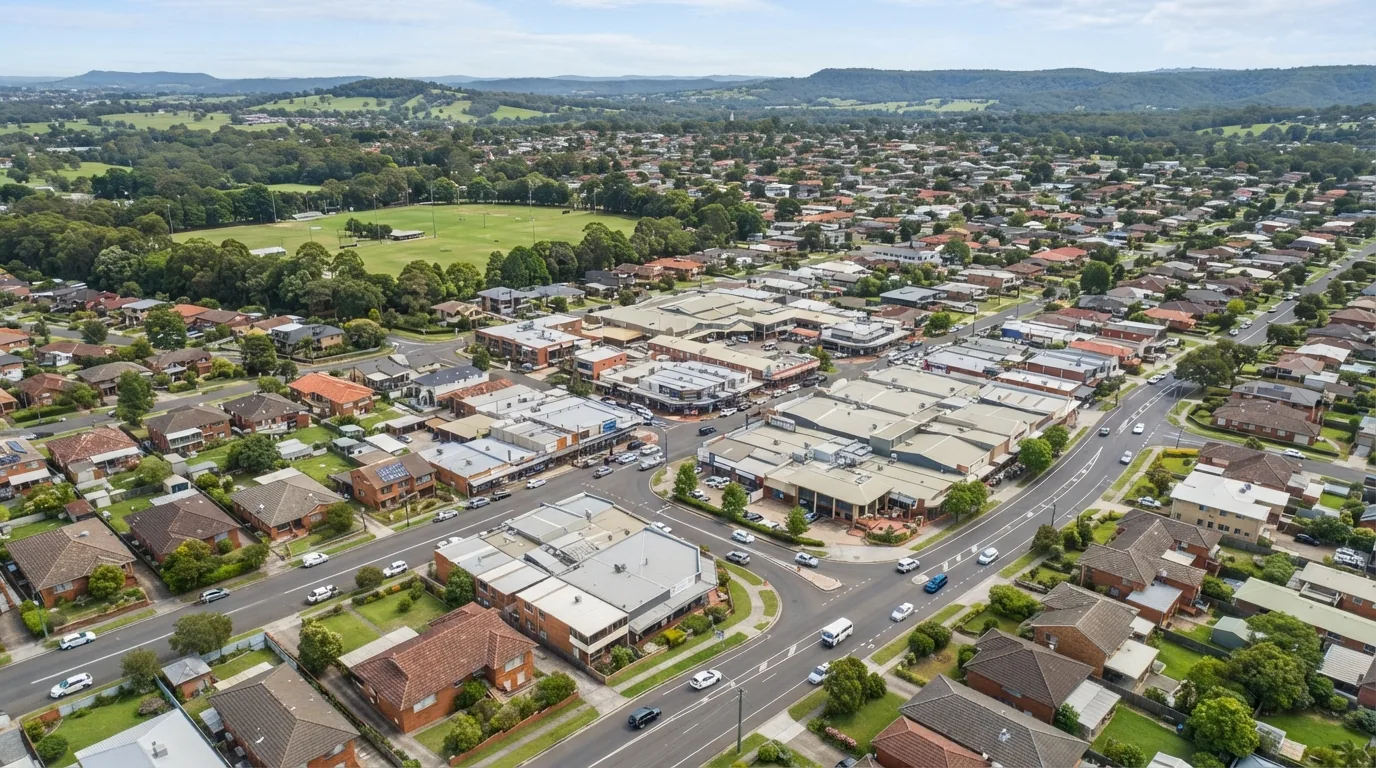
Narellan is about 60 km south-west of the Sydney CBD in the Camden Council area, at roughly 90 m. Around 90 per cent of its homes are separate houses, and the land was farmed for about 200 years before it was subdivided. Narellan Road, the old Hume Highway line, and Camden Valley Way meet at the town centre, and Oran Park Town, built on the old raceway site, is next door. Our work here is mostly estate streets, driveways and the roads that connect them.
On an estate street, a visit usually starts with where trucks can stand, how many driveways we cross and when the street is quiet. Under new streets there are services in fixed corridors, and on larger sites the developer or council may still hold the key to the gate. The road authority or council may need to be asked first on any public road, especially near Narellan Road.
Housing here is newer than older Sydney, so the issue is rarely a worn old surface. It is more often a surface laid over a base that was never meant for heavy trucks, or a kerb and driveway on ground that has settled since it was built. We do not assume the soil. What the ground is made of shows when we dig, and the base design depends on it, so we leave that open until we have seen it.
What we do here most
What Narellan keeps needing
Narellan has grown from farmland into streets and driveways, so most jobs are about new surfaces and what is under them.
Subdivision Road Construction
Estate roads where farmland becomes lots
Where farmland is cut into lots, the roads have to be built from the ground up. That means stripping the topsoil, forming the road, laying drains and kerbs, building the base in compacted layers, and then sealing. The work follows the engineer's design and the council's requirements, so we start by looking at the plans and the ground.
Asphalt Driveway Construction
A new driveway on a detached house block
Most homes here are detached, with a driveway running from the kerb to the garage. We mark where the stormwater and service pits sit, set the levels so water drains toward the street and not the house, and build the base before we lay the asphalt. Ground that has been filled may settle, which is why we check it.
Kerb & Gutter Installation
Kerb and gutter along a new estate street
Kerb and gutter holds the road edge and guides water to the pits. On newer streets, kerb is formed along a line set out from the design, with gaps left for driveways. The base under it has to be firm and even, or the kerb cracks as the ground settles. Services under the footpath have to be located before any digging.
Road repairs
Edges broken by building trucks
Where houses are still going up, heavy trucks turn on the edge of new roads and break them. Cracks and crumbled edges let water into the base. We cut out the failed section and rebuild the base under it. The road owner decides who must be asked before any repair, so we find that out first.
If it is urgent
If a pothole opens up on a Narellan street
- 1Keep people and vehicles clear of the hole, and note its size and where it is, such as the street, the nearest cross street and which lane.
- 2Leave the hole alone and do not fill it with loose soil, sand or gravel, because passing traffic will throw it out and the edge will break further.
- 3Tell us when you call whether the road is in a new estate, on a main road such as Narellan Road, or private, and whether building trucks use it.
Common questions
Frequently Asked Questions
Which suburbs do you cover?
We work across Sydney and the surrounding suburbs, and the service areas page lists twenty-one of them, from Windsor and Richmond in the north-west to Liverpool and Narellan in the south-west. If yours is not listed it is still worth asking, because the list is where we work most often rather than a boundary.
What hours are you open?
We are open Monday to Friday, 8am to 5pm, and closed on Saturday and Sunday. Ring in those hours and tell us the suburb and what the surface is used for.
What is the difference between resurfacing and mill and fill?
Resurfacing lays new asphalt over the existing surface after it has been cleaned and repaired. Mill and fill first grinds off the top layer of old asphalt, then lays new asphalt in its place, which keeps the finished level the same and removes what has worn out.
How do I know if I need a patch or a full rebuild?
A surface that is only worn or lightly cracked can often be patched or resurfaced. Cracks in a network, soft spots that move under a foot, or water that keeps coming back usually mean the base under the surface has failed, and then the base has to be dug out and rebuilt.
How long before I can drive on new asphalt?
Asphalt has to cool before it takes traffic. How long that takes depends on how thick it is laid, the weather and the mix, so we tell you on the day when it is safe to use rather than giving a number here.
Can asphalt be laid in the rain?
No. Rain and a wet surface stop the new asphalt bonding to the layer under it, so a job planned for a wet day is moved to the next dry one.
What is spray sealing and when is it used?
Spray sealing sprays a layer of bitumen onto a prepared surface and covers it with stone chips that are rolled in. It is used on rural roads, long driveways and low-traffic roads where a full asphalt surface is more than the job needs.
Do you work on driveways as well as roads and car parks?
Yes. Asphalt driveways, car parks and roads are all on our service list, and so are the roadworks and civil work that sit underneath them.
Do I need council approval before the work starts?
Work on a public road or footpath usually needs permission from the road authority first. Work on private land can need council approval depending on the job. Describe the site when you call and we can tell you what to check.
What should I have ready when I call?
The suburb, roughly how big the area is in metres, what the surface is made of now, what it is used for and what is going wrong with it. That is enough to start a conversation about the job.
Do you do drainage as well as surfacing?
Yes. Stormwater drainage and retaining walls are on our service list, and they are often part of a surfacing job, because water that sits on or under a surface is what breaks it up.
What is asphalt profiling and road milling?
Profiling uses a milling machine to grind the top off an existing asphalt or concrete surface to a set depth and level. It removes a worn layer, corrects the shape of the road, or gets the surface ready for new asphalt.
Can old asphalt be recycled?
Yes. Old asphalt that has been milled or broken out can be crushed and used again as recycled road base, so it does not all have to go to landfill.
Do you build sports courts?
Sports court asphalting is on our service list. Tell us the type of court and the size of the area, and whether it is a new base or an existing court that needs resurfacing.
What does it cost?
The cost depends on the size of the area, how thick the surface is laid, the condition of the base under it and how easy the site is to reach. No two sites are the same, so we do not publish prices. Describe yours and we will talk through what drives it.
Everything we do here
Services in Narellan, NSW
A suburb that has gone from farmland to estates calls for new roads, driveways and kerbs first, then repairs as they age, so that is the order our services are asked for in Narellan.
Also nearby
We work in these suburbs too
Local, and on the phone
Tell us about your Narellan site
Type whether the work is on a new estate street, a private driveway or a main road, and who owns it. That decides who we must ask first and how a visit is planned.
0468 075 505Monday to Friday 8am to 5pm, Saturday and Sunday closed
Not urgent? Send us the job instead